
HR Audit: A Practical Approach to Understanding Your People System
The term HR Audit is frequently, and somewhat restrictively, associated with mere compliance checks and meticulous documentation review. While adherence to legal and regulatory standards is a necessary component, the true, profound value of an HR Audit lies in its capacity to serve as an objective diagnostic tool; a mechanism for organizations to gain a profound and practical understanding of how their people systems are truly functioning in the present day.
As an organization matures, expands its operations, and increases in structural complexity, a silent but critical drift often occurs.
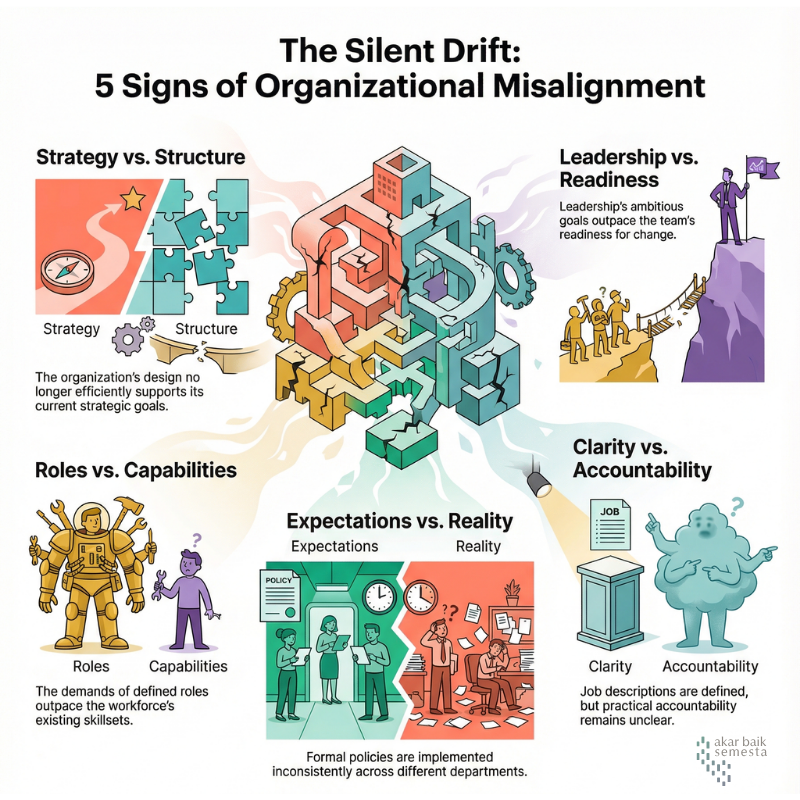
This drift manifests as a dangerous misalignment across key organizational pillars:
Strategy vs. Structure: The organizational structure, originally designed for an earlier phase of growth, may no longer efficiently support the current strategic objectives.
Roles vs. Capabilities: The demands of defined roles outpace the existing skill sets and competencies of the workforce.
Expectations vs. Reality: Formal policies and procedures are in place, yet their implementation varies wildly across departments or management levels, leading to operational inconsistency and employee frustration.
Clarity vs. Accountability: Job descriptions may be meticulously defined, but the practical, day-to-day accountability remains diffuse or unclear, resulting in dropped responsibilities and duplicated efforts.
Leadership vs. Readiness: Senior leaders have higher expectations for performance and change, but middle management and frontline teams aren't getting ready or able to meet those expectations fast enough.
The HR Audit steps in to provide a structured, systematic, and unbiased way to review these complex, underlying organizational conditions. It shifts the focus from symptomatic firefighting to addressing root causes.
HR Audit's Value Proposition Across Key Stakeholders:
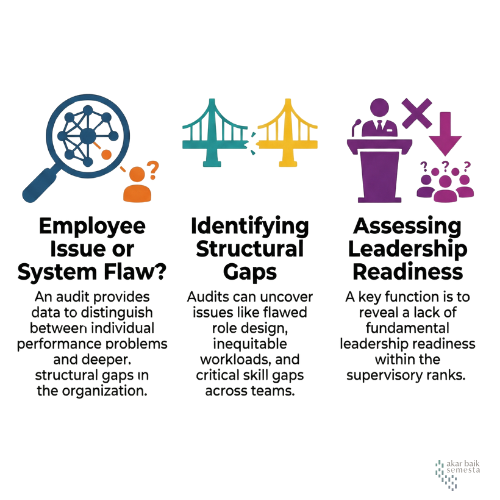
For the Operational HR Team: Clarifying Practice and Performance
For the teams responsible for daily people operations, the HR Audit acts as a powerful mirror. It helps to definitively clarify whether current people practices—from recruitment and onboarding to compensation and performance management—are genuinely aligned with the organization’s actual operational needs. Importantly, the audit assists HR professionals in the following ways:
Distinguish Root Causes: It provides the data to differentiate between what appears to be an individual performance issue and what is, in reality, a structural gap.
Identify Structural Gaps: These gaps often include flawed role design (roles that are impossible to execute effectively), inequitable workload distribution, gaps in capability coverage (critical skills missing across teams), or a lack of fundamental leadership readiness within supervisory ranks.
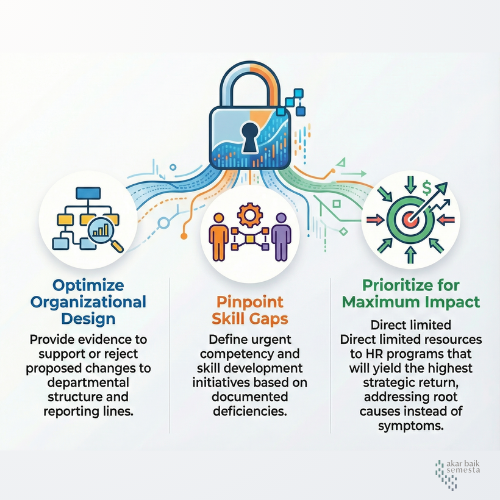
For Strategic HR and People Analytics: The Foundation for Data-Driven Decisions
Moving beyond administration, the HR Audit transforms into a foundational element for strategic decision-making. It enables the HR function to transition from anecdotal evidence and reaction to truly data-driven discussions across the organization. This capability is essential for:
Organizational Design: Providing the necessary evidence to support or reject proposed changes to departmental structure, reporting lines, and spans of control.
Competency Requirements: Clearly defining the most urgent and necessary competency and skill development initiatives based on documented deficiencies.
Prioritization of HR Initiatives: Directing limited resources (time, budget, personnel) toward the HR programs—such as leadership training, system upgrades, or policy revisions—that will yield the highest strategic return. Instead of being trapped in a cycle of reacting to recurring symptoms (e.g., high turnover in one department), the HR Audit empowers teams to address the fundamental, root conditions systematically.
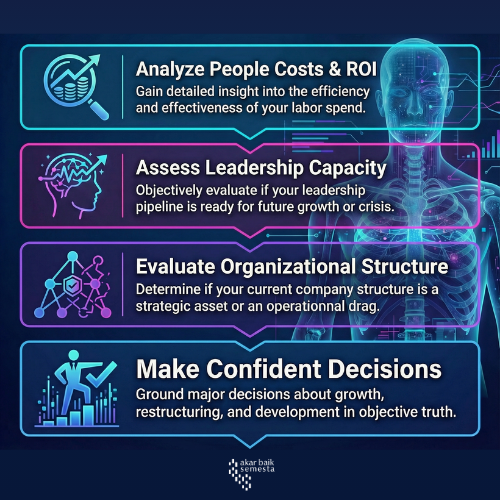
For Business Owners and Senior Leaders: Enhanced Visibility and Confidence
For those ultimately accountable for business outcomes, the HR Audit is a vital tool for improving strategic visibility. It moves the conversation about "people problems" from soft concerns to hard business intelligence by providing a clearer, quantifiable picture of how three critical elements interact with the overall business direction:
People Costs and ROI: Offering detailed insight into the efficiency and effectiveness of the labor spend.
Leadership Capacity: Objectively assessing the depth and readiness of the leadership pipeline to handle future growth or crisis.
Organizational Structure: Analyzing whether the current structure is a strategic asset or an operational drag.
This enhanced visibility translates directly into more confident, informed decisions related to major organizational maneuvers, including scaling for growth, executing necessary restructuring or downsizing, and designing focused, high-impact capability development programs. The HR Audit provides the assurance that decisions impacting the most valuable and costly asset are grounded in objective truth.
At Akar Baik Semesta, HR Audit is conducted as a practical diagnostic, not a compliance checklist. We examine people systems, governance, roles, competencies, and leadership readiness using an evidence based approach. Findings are presented in a clear and usable format, allowing leaders and HR teams to move directly into prioritization and action.
HR Audit is not an end in itself. It is a starting point for organizations that want their HR decisions to be grounded in evidence rather than assumptions.
